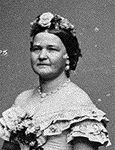
Mary Todd was a Kentucky belle when she married Abraham Lincoln. Their courtship had been stormy — the wedding was even called off once — but Mary had high hopes for her ambitious husband. She was delighted when he was elected President, yet wholly unprepared for life in the White House. On her arrival she learned that hundreds of death threats had been sent to the Lincolns, and she began to live in fear.
An Unforgiving Capital
Mary tried to impress Washington society with fashionable clothing, but succeeded mainly in drawing harsh criticism for her expensive wardrobe and over-the-top spending. She also began to suffer violent headaches — what Lincoln called her "nervous spells" — accompanied by crying, rages, and unpredictable mood swings.
Under Suspicion
With the coming of the Civil War, Mary was immediately suspect because of her Southern roots and the fact that several of her brothers served in the Confederate armed forces. A hearing was even held by the Committee on the Conduct of the War to investigate charges that she was "communicating with the enemy." Lincoln himself appeared to testify to his wife's loyalty.
She stayed weeping in the White House while the funeral cortège continued on to Springfield.
April 1865
Grief Upon Grief
Mary's fragile health took a severe blow with the death of her son Willie in 1862. She had always been fearful for her children — she had already lost a son, Edward, in 1850. Tad, the youngest, was born with a cleft palate, and Robert, the eldest, with crossed eyes. In 1863 she suffered a serious head injury when she was thrown from her carriage, and all who knew her agreed her behavior was worsening. She seemed to improve when her husband was re-elected.
After the Assassination
The assassination of Abraham Lincoln destroyed her. She stayed weeping in the White House while the funeral cortège continued on to Springfield. She then left the United States for six years, traveling with her son Tad. Upon their return, eighteen-year-old Tad unexpectedly died, and Mary plunged once more into irrationality. She was committed to an institution by her surviving son, Robert; released after several months, she lived out the remainder of her life mostly scorned.