211868
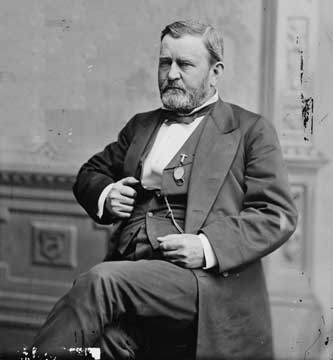
portrait — Ulysses S. Grant
Presidential Election · 1868
The Election of 1868
Ulysses S. Grant defeats Horatio Seymour
War hero Grant wins the first election of Reconstruction.
Republican VictoryUlysses S. Grant defeats Horatio Seymour
War hero Grant wins the first election of Reconstruction.
Republican VictoryThe Result
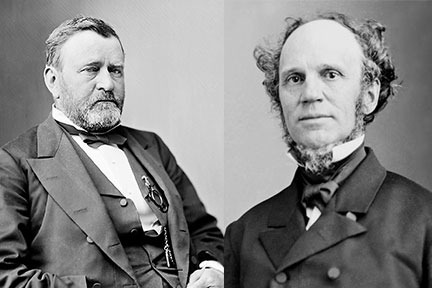

War hero Grant wins the first election of Reconstruction.
General Ulysses Grant received a unanimous vote on the first ballot at the Republican convention. Grant had emerged from the Civil War as the most popular hero.
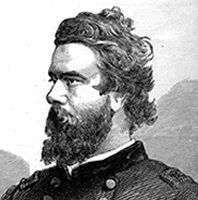
Grant's Democratic opponent was Horatio Seymour of New York. Seymour was an extremely reluctant nominee, saying he would not be the candidate. In the end, the Democrats forced Seymour to run. He gained the nickname "the Great Decliner."
Grant did not campaign and made no promises. Seymour broke with tradition and campaigned actively in the North.
The Republicans promised continued radical reconstruction in the South. Democrats, on the other hand, promised more swift reintegration of the South. The Democrats attacked the Republicans for their promises of reconstruction. Republicans claimed the Democrats were going to give up all that was accomplished in the Civil War. They also attacked Grant for being a drunkard. Ultimately, it was Grant's personal popularity that determined the outcome of the election.
The Popular Vote
The recorded popular vote in each state.
Figures as recorded by HistoryCentral.