251884
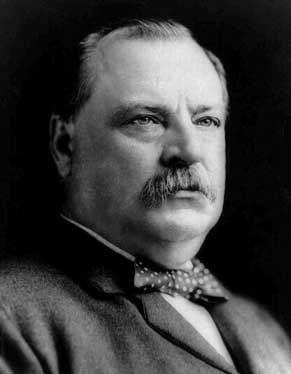
portrait — Grover Cleveland
Presidential Election · 1884
The Election of 1884
Grover Cleveland defeats James G. Blaine
Cleveland becomes the first Democrat elected since the Civil War.
Democratic VictoryGrover Cleveland defeats James G. Blaine
Cleveland becomes the first Democrat elected since the Civil War.
Democratic VictoryThe Result
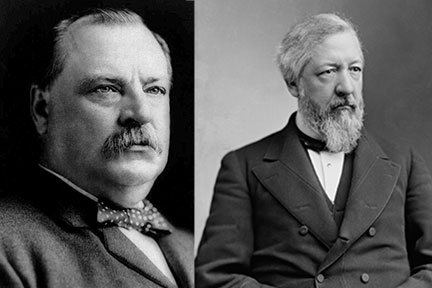

Cleveland becomes the first Democrat elected since the Civil War.
The Democratic convention was held in Chicago in July 1884. Grover Cleveland was the front-runner from the opening of the convention. The only significant opposition to Cleveland was from the New York Tammany organization. Cleveland received the nomination on the second ballot with 683 votes. Cleveland's opponent in the election was James Blaine of Maine. President Arthur attempted to secure the Republican nomination but had little support. Signing the Civil Service Reform Act after the assassination of President Garfield had lost him support within the party. He could not fall back on the help of the reform wing party since he had never been a member of that wing. The only individual at the convention who had a chance to receive nomination other than Blaine was General Sherman. He ended speculation that he would run by making what has become known as a Sherman statement: "If nominated, I will not accept, and if elected I will not serve." Blaine won the nomination on the fourth ballot.
There were no major substantive issues that separated the candidates; thus, the election turned on the candidates themselves. Blaine was attacked for his close relations with the railroad interests, from which it was claimed that he received financial benefits. Blaine's opponents published what were called the "Mulligan Letters," which purported to show that Blaine received bribes. Cleveland, on the other hand, was attacked for being immoral for his affair before his marriage with Maria Halpin, which produced a son. The Republicans would chant "Ma Ma, Where's my Papa." Cleveland was able to defuse the story by telling the truth. Cleveland received the support of many reformers including several leading Republicans. Cleveland won the election in a close vote.
The Popular Vote
The recorded popular vote in each state.
Figures as recorded by HistoryCentral.